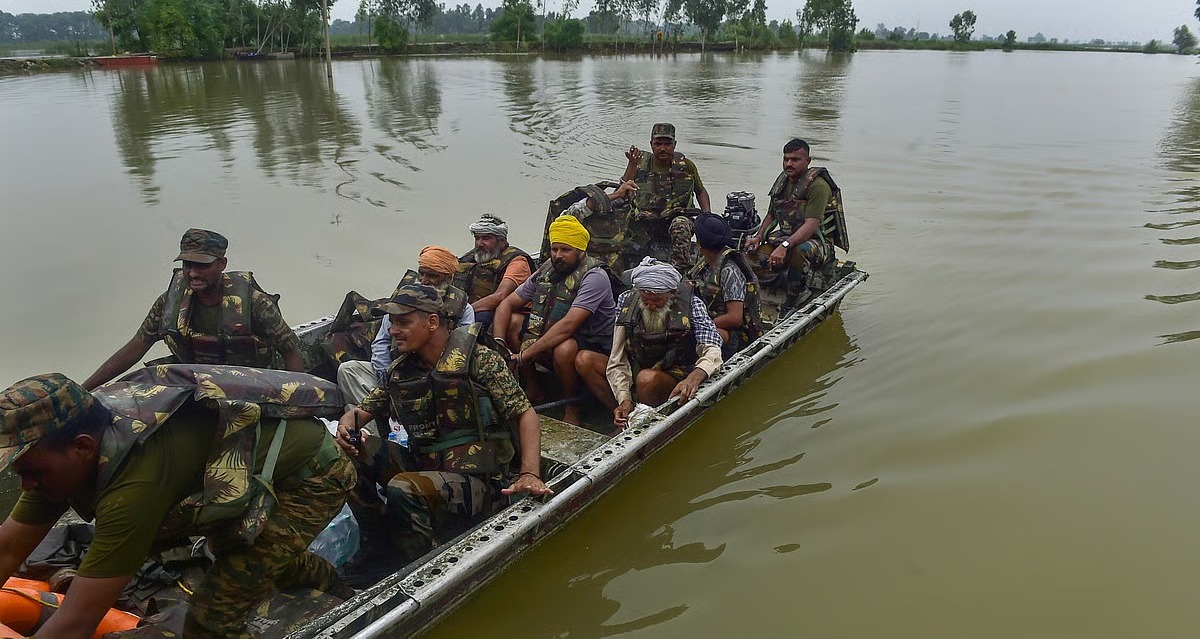
According to the Army’s Western Command, more than 3,000 citizens received medical assistance, more than 5,500 civilians and 300 paramilitary men were rescued, and 27 tonnes of ration and necessary supplies were provided to villages devastated by the flood. Due to the growing water levels in the Ghaggar river, seven new columns have also been inaugurated in the Punjabi districts of Sarala and Harchandpura as well as Tarn Taran, Ferozepur, Shahkot, Phillaur, and Dhatewal.
Under Operation RAHAT, the Western Command is still conducting extensive Humanitarian Assistance and Disaster Relief (HADR) activities throughout the flood-affected areas of the Jammu-Pathankot sectors and other parts of Punjab. Relief operations have been underway around-the-clock, rescuing stranded individuals, repairing critical infrastructure, and providing life-saving aid, with over 50 Army columns on the ground activated thus far. According to the statement, troops are always helping the Border Security Force (BSF) and civil administration with emergency construction and debris removal.
Engineer regiments have restored the major water supply line at the Sidhra bridge, rebuilt the Jaitpur Bund in the Mamun sector, and used heavy equipment to repair damaged roads between Tawi View Point and Bikraman Helipad. Army forces are still working in Punjab to fortify bunds at susceptible areas, deliver food and feed to remote villages, and clear important waterways to stop additional floods. As a testament to their commitment, Western Command troops also carried out a life-saving evacuation during these continuing operations.