In a landmark development toward resolving a five-decade-old border dispute, Assam and Meghalaya have installed the first boundary pillar in one of the six mutually agreed sectors, marking the beginning of on-ground implementation of the 2022 Memorandum of Understanding (MoU) signed between the two states.
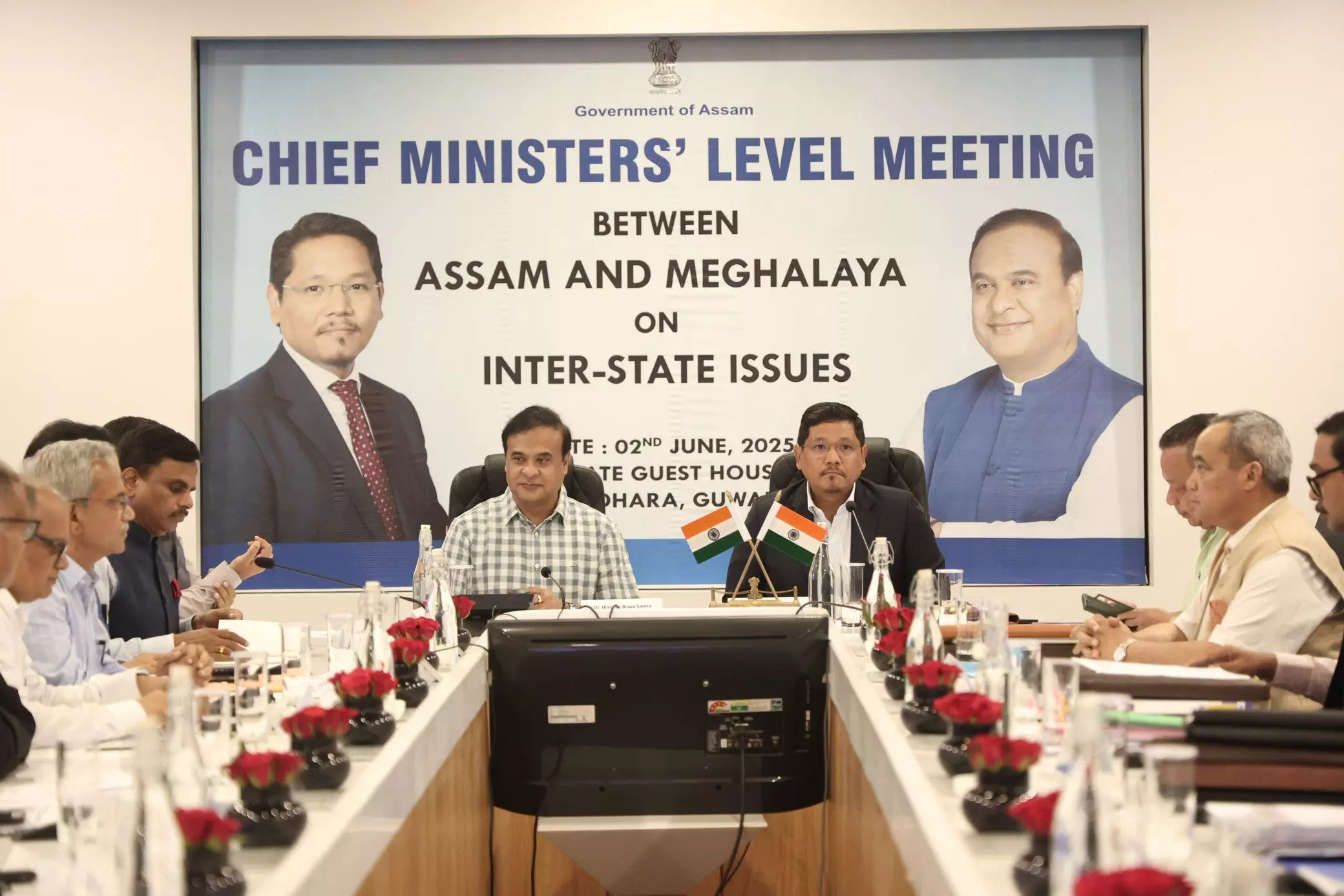
Assam Chief Minister Himanta Biswa Sarma announced the milestone on Friday, calling the pillar a “symbol of clarity and peace” that will bring governance to “once grey areas.” The installation follows a joint decision by Sarma and Meghalaya Chief Minister Conrad K. Sangma to complete pillar construction in five resolved sectors by August 15, 2025, ahead of Independence Day.
The boundary pillar was erected in the Hahim region of Assam’s Kamrup district, along the banks of the Gijang and Tirchang rivers, which pass through several villages including Umshek (Mathapota), Maspara, Malapara, Ranighar, Salpara, Thutia Bazaar, and Rangsapara near Athiabari in Meghalaya.
The border dispute dates back to 1972, when Meghalaya was carved out of Assam. The Assam Reorganisation Act, 1971, left several boundary areas undefined, leading to tensions and administrative ambiguity. After 32 rounds of talks, both states signed an MoU in March 2022, resolving six of the twelve contentious sectors: Tarabari, Gizang, Hahim, Boklapara, Khanapara-Pilingkata, and Ratacherra.
Out of 36.79 sq km of disputed land addressed in the first phase, Assam retained 18.46 sq km, while Meghalaya received 18.33 sq km, reflecting a near-equal division.
Survey teams from both states have begun parallel construction efforts, with additional pillars planned in the coming weeks. Local residents expressed relief and optimism, with one elderly villager from Rangthali stating, “We’ve lived in confusion for decades, caught between two states. Now, history is being etched in stone”.
While the current phase targets six resolved sectors, six areas remain disputed—Block I, Block II, Langpih, Deshdoomreah, Khanduli, and Nongwah-Mawtamur—due to ethnic sensitivities and historical claims. Discussions on these zones are expected to continue without a fixed timeline.
The erection of the first boundary pillar is being hailed as a turning point in cooperative federalism, offering hope for lasting peace and administrative clarity in one of Northeast India’s most sensitive border regions.