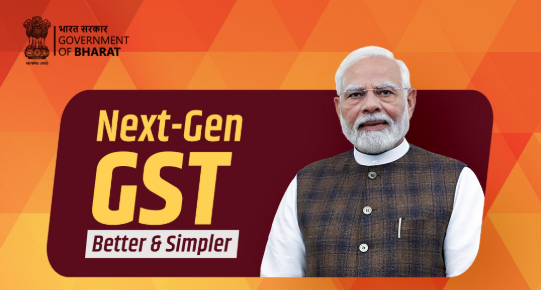
The year 2025 marked a turning point in India’s taxation journey as the government rolled out next-generation Goods and Services Tax (GST) reforms, reshaping consumption patterns and revenue trends across the economy. The reforms, described as the biggest reset of the indirect tax system since GST’s introduction in 2017, were aimed at simplifying structures, rationalising rates, and stimulating demand.
The new GST framework reduced the number of slabs to a two-tier structure of 5% and 18%, cutting taxes on household essentials such as soaps, toothpaste, and Indian breads to 5% or nil, thereby boosting affordability. Life-saving medicines were also moved to the lower bracket, making healthcare more accessible. At the same time, taxes on two-wheelers, small cars, televisions, air conditioners, and cement were reduced from 28% to 18%, providing relief to the middle class and encouraging consumption.
On the other end of the spectrum, the government raised levies on luxury goods, tobacco, pan masala, and aerated drinks to 40%, ensuring revenue buoyancy while discouraging consumption of sin items. This balancing act between rate cuts and higher levies was designed to protect government revenues while driving demand in critical sectors.
Finance Minister Nirmala Sitharaman highlighted that the reforms were anchored in three pillars: structural correction, rate rationalisation, and process simplification. The changes resolved long-standing issues such as inverted duty structures and classification disputes, which had created friction for businesses.
Analysts observed that the reforms had an immediate impact on consumption trends, with sales of automobiles, consumer durables, and farm equipment showing a noticeable uptick. Revenue collections also remained strong, with GST inflows crossing ₹1.8 lakh crore per month, reflecting both higher compliance and increased demand.
Experts believe the reforms have strengthened India’s domestic demand base at a time of global economic uncertainty. By cutting costs for households and industries while maintaining fiscal discipline, the government has positioned GST 2.0 as a cornerstone of India’s growth story.