India’s aggressive pursuit of bilateral trade agreements has prompted calls for the United States to accelerate its own negotiations, as geopolitical analysts warn of shifting global dynamics. According to a recent Newsweek report, India’s successful conclusion of the India–UK Free Trade Agreement (FTA) and ongoing talks with the European Union and Oman underscore its emergence as a global swing power, capable of reshaping trade alliances independently.
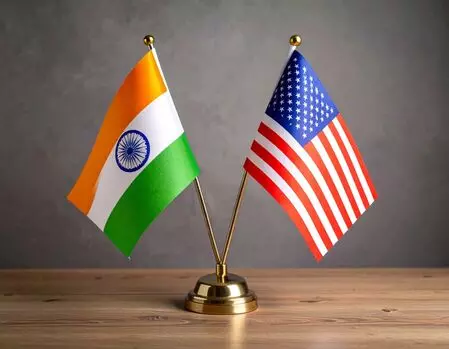
Despite optimism from both sides, the India–US trade pact remains elusive. Commerce and Industry Minister Piyush Goyal confirmed that negotiations are progressing “at a very fast pace,” with the next round of talks scheduled for August in India. The two nations aim to finalize the first phase of the agreement by September–October, targeting a doubling of bilateral trade to $500 billion, up from the current $191 billion.
Sanjeev Sanyal, a member of India’s Economic Advisory Council, emphasized that India seeks equal engagement with Western powers, stating, “We understand that Western countries have their interests, but we also have ours. So, we will speak up for our interests”. Analysts argue that India’s recent trade successes demonstrate its leverage and reduce its dependency on any single partner, including the US.
Lisa Curtis, director at the Center for a New American Security, noted that the US must make strategic concessions to preserve its partnership with India. “India is not desperate enough for a trade deal with the United States to open up its agricultural sector,” she said, referencing India’s firm stance on protecting sensitive sectors.
The India–UK FTA, which took three years to negotiate, is seen as a model of balanced diplomacy, safeguarding domestic interests while expanding global reach. Experts caution that the US risks falling behind if it does not respond swiftly to India’s trade momentum, especially amid rising competition from other global players.
As India resumes tourist visas for Chinese citizens and deepens ties with multiple regions, its trade diplomacy reflects a broader strategic recalibration. The outcome of the India–US trade talks will likely shape the future of bilateral relations and influence global trade alignments in the years ahead.