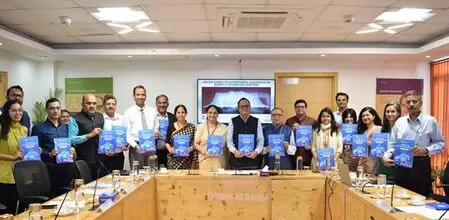
India’s eight operational Science and Technology (S&T) Clusters are poised to play a transformative role in the country’s innovation landscape, according to Principal Scientific Adviser to the Government of India, Prof. Ajay Kumar Sood. Releasing the S&T Clusters Annual Report 2024–2025 on June 26, Prof. Sood emphasized the Clusters’ growing impact on regional development and national resilience.
Launched in 2020 under the guidance of the Prime Minister’s Science, Technology, and Innovation Advisory Council (PM-STIAC), the S&T Clusters initiative brings together academic institutions, R&D organizations, industry, startups, and local governments to co-develop demand-driven, science-led solutions. The eight active Clusters are located in Delhi-NCR, Bengaluru, Hyderabad, Bhubaneswar, Jodhpur, Pune, Vizag, and the Punjab region.
The report highlights a series of high-impact innovations:
- Delhi-NCR (DRIIV Cluster): Deployment of EV charging infrastructure to reduce urban emissions and congestion.
- Hyderabad (RICH Cluster): Acceleration of biotech and health-tech tools for public health.
- Vizag (AMTZ Cluster): Development of indigenous pacemaker leads and other medical devices.
- Bengaluru (BeST Cluster): AI-enabled e-waste segregation systems to improve recycling efficiency.
- Kalaanubhav.in: An AR/VR-enabled digital marketplace empowering traditional artisans.
- One Delhi App: A unified digital transit platform serving over 300,000 users.
Prof. Sood announced the transition to Phase 2.0, which will focus on inter-cluster collaboration, shared R&D infrastructure, and national-scale innovation grants. “The Clusters are no longer isolated pilots—they are evolving into platforms for scalable, cross-sectoral innovation,” he said.
The initiative also includes pioneering efforts in One Health surveillance, diabetic foot screening mats, and real-time water quality monitoring, underscoring the Clusters’ commitment to inclusive and sustainable development.
Scientific Secretary Dr. Parvinder Maini highlighted the importance of industry engagement in the next phase, noting that deeper collaboration between scientific institutions and the private sector will be key to unlocking the Clusters’ full potential.
With a focus on regional relevance and national priorities, India’s S&T Clusters are emerging as critical engines of innovation, capable of addressing complex challenges through science, technology, and collective action.