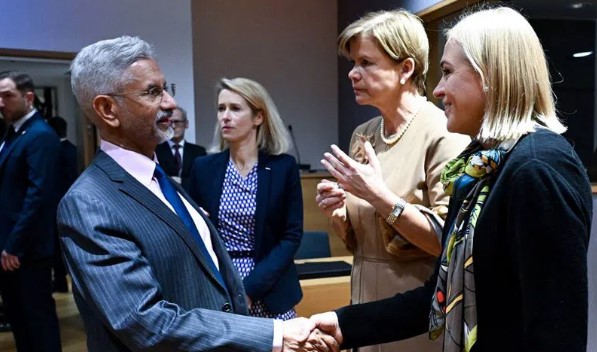
External Affairs Minister S. Jaishankar concluded a high-stakes two-day visit to Brussels on March 16, 2026, marking what he described as a “turning point” in India-European Union relations. Engaging with top EU leadership, including European Commission President Ursula von der Leyen and European Council President António Costa, Jaishankar emphasized that the finalization of the India-EU Free Trade Agreement (FTA) is the key to unlocking the “enormous economic potential” shared by the two regions. Following a landmark January summit where the “mother of all deals” was concluded, this visit focused on the vigorous implementation of the pact to ensure that benefits translate into tangible outcomes for businesses and citizens. Jaishankar noted that the FTA not only serves as a commercial engine but also expresses the strategic depth of the partnership in an increasingly multipolar and uncertain world.
Beyond traditional trade, the discussions in Brussels delved into the modernization of the Trade and Technology Council (TTC) to better facilitate collaboration on cutting-edge and critical technologies. Both sides expressed a shared commitment to de-risking global supply chains and enhancing economic resilience, with the FTA expected to foster deeper industrial linkages and encourage the growth of Global Capability Centres (GCCs) in India. The Minister also highlighted the importance of “talent mobility” and the establishment of the Legal Gateway Office in India as vital steps toward a more integrated workforce. Connectivity remained a top priority, with both parties reaffirming their dedication to giving practical shape to the India-Middle East-Europe Economic Corridor (IMEC), which aims to revolutionize logistics and energy links between the two continents.
The visit also served as a critical platform for diplomatic alignment on pressing global challenges, including the ongoing conflicts in West Asia and Ukraine. Jaishankar participated in the EU’s Foreign Affairs Council at the invitation of High Representative Kaja Kallas, where maritime security—specifically the protection of shipping in the Strait of Hormuz—was a major point of discussion. By reinforcing the Security and Defence Partnership, India and the EU are positioning themselves as a combined “factor of stability” in a volatile geopolitical landscape. As the two sides prepare for the upcoming Strategic Dialogue later this year, the momentum from this Brussels visit signals that 2026 will be a landmark year for operationalizing agreements that span from digital innovation to maritime defense.