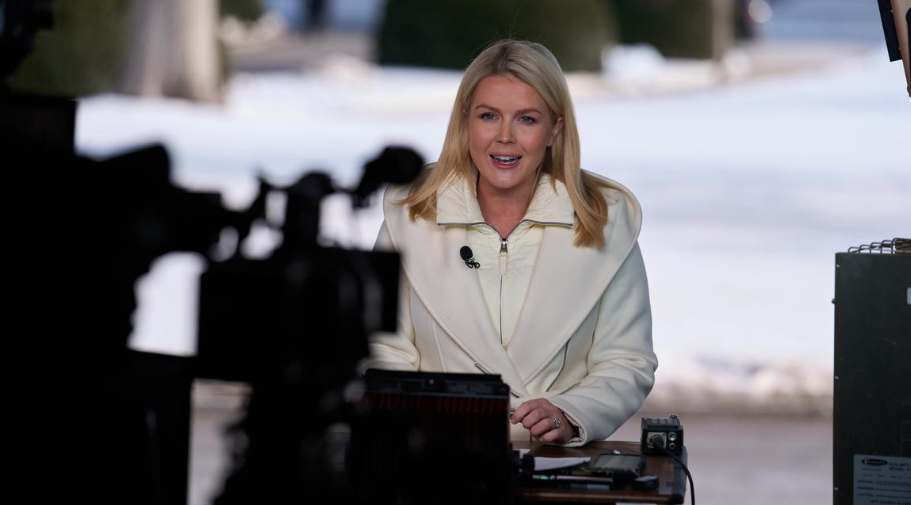
Press Secretary Karoline Leavitt noted that Prime Minister Modi committed to investing $500 billion in the U.S. economy, with a focus on agricultural goods, energy, and transportation.
The White House celebrated a landmark trade deal with India, highlighting Prime Minister Modi’s pledge to halt Russian oil imports and inject $500 billion into vital sectors of the American economy.
Press Secretary Karoline Leavitt confirmed that a direct dialogue between President Trump and PM Modi resulted in a major trade pact. Under this deal, India will pivot its energy imports from Russia to the U.S. and Venezuela. Additionally, India has committed to a $500 billion investment plan across American energy, farming, and infrastructure industries.
Additionally, the White House confirmed that PM Modi has pledged half a trillion dollars in investments to the United States. According to Leavitt, these funds will support American industries such as farming, energy, and transportation, further solidifying the trade agreement brokered by the President.
How the India-US Trade Partnership Collapsed Once the frontrunner for a landmark bilateral agreement, India saw its prospects sour as President Trump intensified a trade war. After dismissing the nation’s economic state as “dead,” the US administration pivoted from negotiations to the imposition of aggressive tariffs, signaling a significant rift in diplomatic ties.
Speaking to Fox News on Tuesday, Press Secretary Karoline Leavitt credited the new bilateral trade pact to a “great call” held on February 2 between President Trump and Prime Minister Modi. She noted that the deal is a byproduct of the deep personal rapport and high regard the President holds for the Prime Minister and India as a whole.
White House spokesperson Karoline Leavitt highlighted the “direct benefit” to the American public following a new pact with India. The agreement includes a massive $500 billion commitment to U.S. agriculture and energy, alongside India’s decision to swap Russian oil for American-managed energy sources.
According to White House Press Secretary Karoline Leavitt, the new trade agreement between the U.S. and India represents a significant victory for American businesses and workers, as it lowers U.S. tariffs on Indian goods to 18% while securing a 0% tariff rate for American exports entering India. This breakthrough follows a period of heightened tension where the Trump administration had imposed cumulative tariffs as high as 50%—a figure that included a 25% penalty specifically targeting India’s purchase of Russian oil.
In a Truth Social post on February 2, 2026, President Trump confirmed that, effective immediately, the U.S. will reduce its reciprocal tariff from 25% to 18%. In exchange, India has committed to eliminating both tariff and non-tariff barriers for U.S. products, effectively moving toward “zero” duties and opening up its massive market to American energy, technology, and agricultural goods.
In a significant move to strengthen bilateral ties, Prime Minister Modi has pledged to prioritize the “Buy American” initiative, committing to over $500 billion in purchases across key U.S. sectors including energy, technology, agriculture, and coal. President Trump praised the agreement and his strong personal connection with the Prime Minister, stating that their shared ability to deliver results will make the U.S.-India relationship stronger than ever. For his part, Prime Minister Modi expressed his satisfaction with the breakthrough, describing the conversation with his “dear friend” as a wonderful step forward for both nations.
In a significant diplomatic breakthrough on February 2, 2026, President Trump and Prime Minister Modi finalized a landmark trade agreement following a productive direct call. White House Press Secretary Karoline Leavitt announced that the deal rests on the strong personal rapport and mutual respect between the two leaders, resulting in a major energy pivot: India has committed to halting its purchase of Russian oil in favor of sourcing from the United States and Venezuela. This transition, which Leavitt noted includes U.S. oversight of Venezuelan oil commerce, is expected to provide direct economic benefits to the American people.+2
Beyond energy, the agreement includes a massive commitment from Prime Minister Modi to “Buy American” by investing over $500 billion across U.S. sectors such as technology, transportation, agriculture, and coal. Economically, the pact provides a “huge win” for both nations by immediately reducing the U.S. reciprocal tariff on Indian goods from 25% to 18%—effectively removing the prior 50% cumulative burden that had included penalties for Russian oil trade. In return, India will move to eliminate its own tariffs and non-tariff barriers against American exports, aiming for a 0% rate. Both leaders hailed the deal as a testament to their ability to deliver results, with Prime Minister Modi thanking President Trump on behalf of India’s 1.4 billion people and reaffirming that their partnership is vital for global stability and prosperity.